
Join over 5M+ verified members worldwide and start connecting today in a privacy-first, respectful dating environment.
Join over 5M+ verified members worldwide and start connecting today in a privacy-first, respectful dating environment.
Traffic leaving Clark International Airport does not feel like arrival or departure. It feels like redistribution. Cars split toward Angeles City, San Fernando, and Subic Bay in different directions, carrying different social layers without mixing them immediately.
Search behavior around “Sugar Mommy Central Luzon” overlaps with a regional structure where geography directly controls social exposure. Unlike dense capital cities, Central Luzon separates interaction into zones that rarely overlap unless travel forces it.
Understanding how connections form here requires following movement patterns — airport corridors, hotel clusters, business districts, and coastal weekend routes.
Clark Freeport Zone operates differently from surrounding cities. Business parks, aviation facilities, casinos, and international hotels create a controlled environment where external noise is reduced.
In this zone, professional women working in aviation support, BPO management, or foreign companies often move within structured schedules. Interaction happens in predictable places — hotel lounges, corporate cafés, airport-adjacent restaurants.
High net worth individuals passing through Clark are often not based here permanently. This creates a pattern of temporary density — people overlap for short windows, then leave.
Luxury dating Central Luzon Philippines patterns in Clark are shaped by this repetition-without-stability cycle.
Angeles City is the most socially dense nightlife zone in Central Luzon. Fields Avenue and surrounding streets form a continuous entertainment corridor.
However, interaction is not uniform. There is a visible separation between casual nightlife flow and higher-end hotel-based environments.
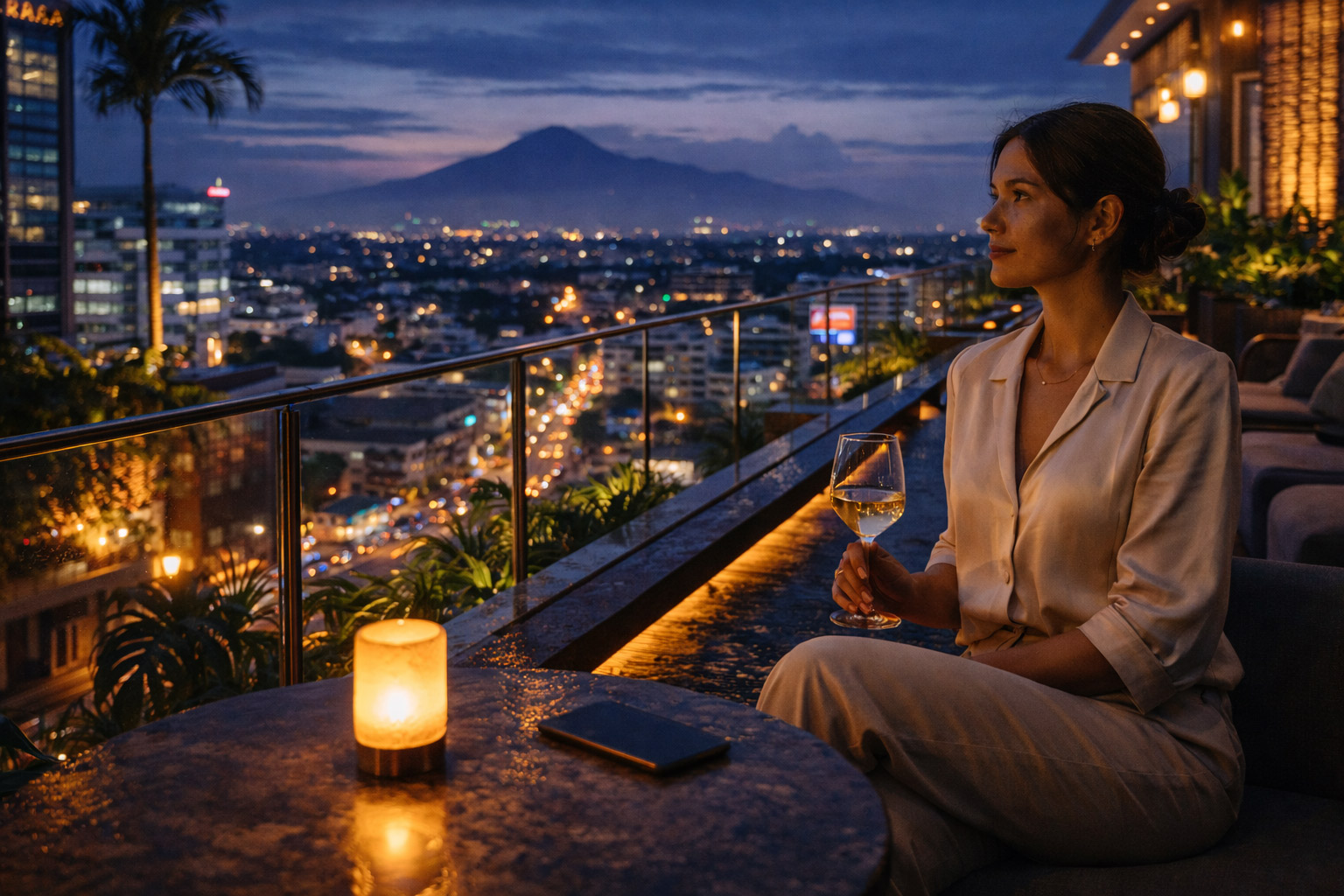
Professional women dating in Clark Freeport Zone and nearby Angeles often appear in structured environments first — hotel bars, rooftop lounges, invitation-based events — before moving into more informal nightlife settings.
The social rhythm here is fast, but filtered. Repeated presence matters more than initial interaction.
San Fernando functions as a slower structural layer compared to Clark and Angeles.
Government offices, hospitals, law firms, and regional headquarters define daily movement. Social interaction is less nightlife-driven and more schedule-based.
Elite social activity in San Fernando Pampanga tends to appear in malls, mid-scale restaurants, and private family gatherings rather than entertainment districts.
Connections here build over time through repeated institutional exposure rather than short-term encounters.
Subic Bay introduces physical separation from inland Central Luzon dynamics. The former naval base structure creates wide roads, controlled zones, and coastal commercial strips.
Discreet dating in Subic Bay Philippines often follows a different rhythm — fewer interactions, but longer continuity when they do occur.
Hotels, marina areas, and resort zones form the primary interaction points. External tourism adds variability, but local professional circles remain relatively stable.
The coastline reduces density but increases environmental focus in social interaction.
Bulacan sits between Central Luzon and Metro Manila influence. Residential expansion has created new gated communities and commuter populations.
Professional women here often work in Manila but live in suburban developments, creating a split routine between work and residence.
Social interaction is fragmented — weekday Metro Manila exposure, weekend Bulacan stability.
This dual structure affects how relationships form and sustain over time.
Tarlac and Nueva Ecija operate with lower population density and fewer high-intensity social zones.
Education institutions, agriculture, and regional administration define most professional roles.
Interactions here are slower but more consistent. The same individuals appear repeatedly across limited social venues.
There is less variation, but also less volatility in social structure.
Clark airport acts as the central connector. Weekends and short trips between Angeles, Subic, and Metro Manila create overlapping social exposure.
Expat dating Pampanga Philippines patterns often depend on this movement cycle — temporary presence, repeated returns, and predictable hotel-based interactions.
Connections are often not anchored in a single city but distributed across multiple zones.
Central Luzon does not operate on a single rhythm. Each zone has its own timing structure:
Timing often determines interaction opportunity more than location alone.
Most experienced participants rely on repetition and venue consistency rather than unfamiliar introductions.
Primarily through repeated exposure in Clark hotels, Angeles nightlife zones, and commuter-linked Metro Manila routines.
Yes, especially for international and high-income circles, due to airport proximity and hotel infrastructure.
Clark is structured and corporate; Angeles is nightlife-driven and more fluid in social interaction.
Yes, due to its resort-based layout and overlapping tourist-local environments.
Yes. Short-distance travel between Clark, Angeles, Subic, and Manila is common and shapes interaction patterns.
San Fernando and Clark tend to produce more stable, repeat-based interactions due to institutional and business presence.