
Join over 5M+ verified members worldwide and start connecting today in a privacy-first, respectful dating environment.
Join over 5M+ verified members worldwide and start connecting today in a privacy-first, respectful dating environment.
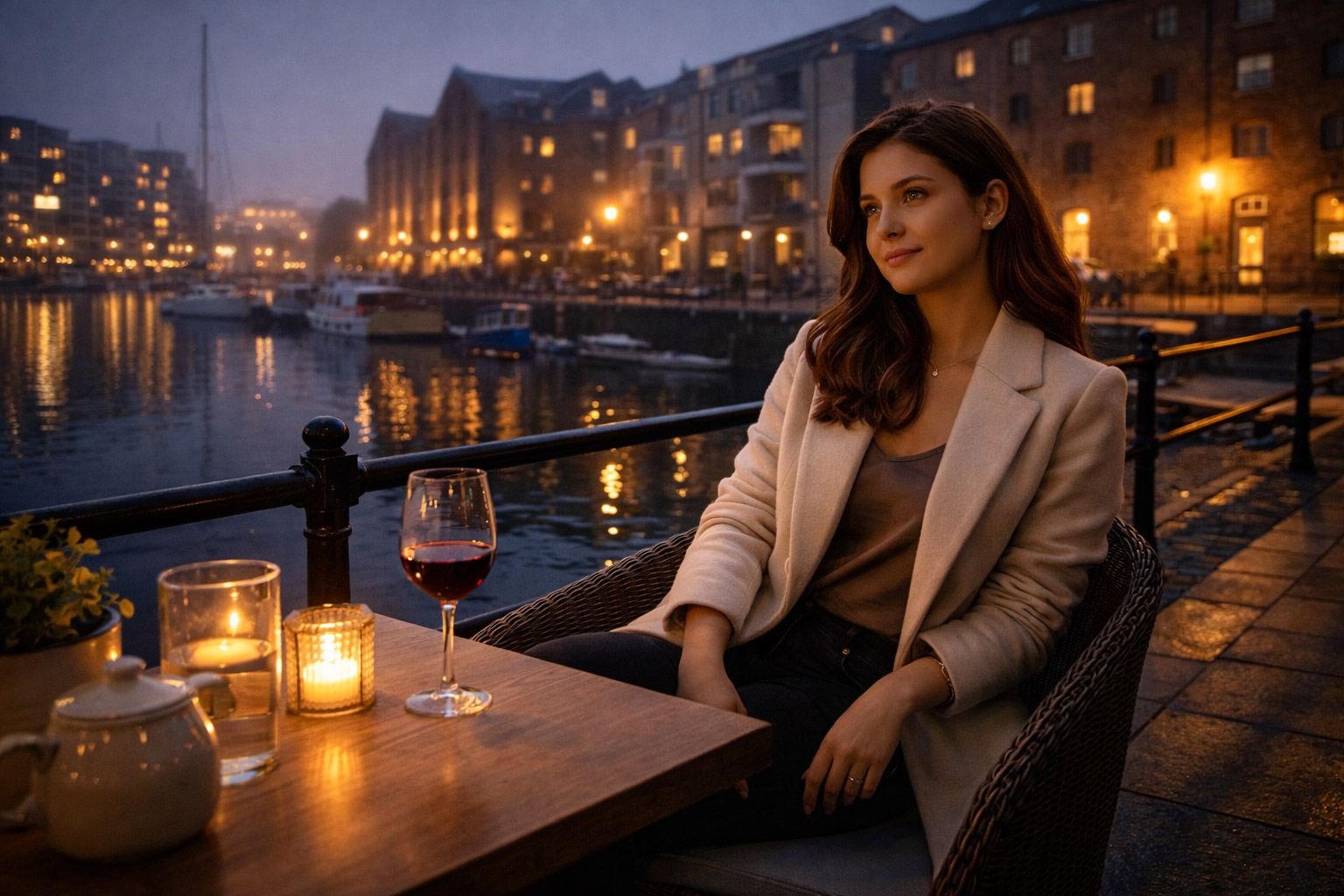
Along the harbourside in Bristol, especially around areas like Wapping Wharf and the Floating Harbour, daily interaction often develops in a low-formality way. Tables near the water are frequently shared by people who return to the same cafés, not as a planned meeting, but as part of overlapping routines.
Conversations in these spaces rarely start with introductions. In practice, recognition is more common than first-time engagement—people notice each other over repeated visits to independent cafés, studios, and riverside workspaces rather than through structured social settings.
In Bristol’s creative economy—particularly around animation studios, design agencies, and small freelance collectives in areas such as Stokes Croft, Clifton, and the city centre—social familiarity often develops gradually through shared environments rather than explicit networking intent.
Within what might be externally labeled a Sugar Mummy Bristol dynamic, relationships tend to emerge indirectly. There is rarely a clearly defined starting point; instead, familiarity builds through repeated presence in the same locations, shared working rhythms, and informal conversation over time.
From an observational standpoint, Bristol’s social structure places relatively low emphasis on overt status signaling in early interactions. Trust is more commonly formed through consistency of presence, tone of communication, and perceived stability in lifestyle rather than immediate verbal framing of intent.
Bristol Harbourside in late afternoon doesn’t behave like a conventional social district. It functions more like a transitional workspace than a destination.
Around the waterfront near Wapping Wharf and the Millennium Square edges, movement slows after peak working hours. People don’t immediately leave the area — they shift states rather than locations.
You’ll typically notice small behavioral patterns rather than obvious social interaction:
The atmosphere is shaped less by intention and more by repetition. People are not actively “looking to meet others,” but routines overlap naturally due to shared timing and geography.
This is particularly visible around harbourside cafés and pedestrian routes connecting Spike Island, Queen Square, and the floating harbour walkways.
Over time, familiarity forms indirectly. The same individuals appear across different days and similar hours, not because of coordination, but because Bristol’s creative and tech workforce often operates within overlapping schedules.
That repetition replaces the need for deliberate social initiation. Interaction, when it happens, tends to emerge from recognition rather than approach.
In Bristol, live music spaces rarely feel like nightlife venues in the traditional sense. Smaller rooms around Stokes Croft, King Street, and parts of the Harbourside often carry low ceilings, uneven acoustics, and a kind of intentional imperfection in sound.
People are usually standing rather than seated, but not compressed. There is distance without isolation. The space feels structured around listening rather than social display.
Conversations tend to form in short gaps between sets rather than during performance. It is common to hear brief exchanges about the last song, the band’s influence, or even the venue’s sound quality itself.
In this setting, interaction develops in a slower and more observational way:
In parts of Bristol such as Clifton Village or near Queen Square, these environments attract a mix of students, creative professionals, and local residents who are more focused on atmosphere than visibility.
Within a Sugar Mummy Bristol context, these venues function less as “dating spaces” and more as informal social filters. Interaction is indirect, but often more reflective of personality, attention, and cultural alignment than structured nightlife settings.
Rather than direct signaling, the environment reveals preferences gradually through conversation timing, listening behavior, and response to shared cultural cues.
In :contentReference[oaicite:0]{index=0}, independent workspaces rarely feel like formal offices. They often sit above cafés in :contentReference[oaicite:1]{index=1}, inside converted warehouses near the Harbourside, or behind doors in older brick buildings around Temple-side redevelopment zones.
The atmosphere is shaped less by presentation and more by continuity of presence. People don’t usually arrive to “network” in a direct sense. They return to ongoing environments:
In areas around :contentReference[oaicite:2]{index=2} and the creative clusters near :contentReference[oaicite:3]{index=3}, it is common to see hybrid routines: freelancers moving between studio desks, university-linked researchers from :contentReference[oaicite:4]{index=4}, and small teams working across short project cycles.
There is often no formal introduction moment. Familiarity develops gradually through repeated overlap — the same table, the same hour, the same ongoing project discussion seen across multiple days or weeks.
From a behavioral perspective, entry into these environments is less about social initiation and more about permission-based continuity. You are not immediately “part of the space”; you become legible through consistent presence, respectful collaboration, and predictable working rhythm.
Safety and professionalism are implicit expectations. Many studios in Bristol operate as semi-private environments, meaning access is often restricted to members, collaborators, or invited contributors rather than open public traffic.
In Bristol, the contrast between Clifton and Stokes Croft is less about distance and more about social rhythm. Locals often describe Clifton as structurally calm — Georgian streets, controlled pacing, and interactions that tend to unfold gradually rather than immediately.
Around Clifton Village and the Downs, conversations in cafés or residential streets often start indirectly. People usually observe context first: tone, familiarity, and how someone moves through shared space before any real engagement develops.
Stokes Croft operates with a different social tempo. It is more visibly expressive, shaped by independent venues, street art culture, and a higher density of informal interaction. Compared with Clifton, communication here tends to be more immediate, but also more scrutinised in terms of authenticity and intent.
Locals and long-term residents often note that Stokes Croft does not necessarily feel “easier” socially — it simply filters differently. Directness is more acceptable, but performative behaviour is usually detected quickly, especially in smaller community-facing venues.
Southville sits between these two environments. Around North Street and the surrounding residential blocks, the pace is more balanced: socially open without being overly exposed, and structured without feeling rigid.
In practice, these areas in Bristol do more than create atmosphere differences. They subtly influence who naturally stays in a space long enough to form connections, and who prefers to step out before engagement fully develops.
In Bristol, financial independence is usually not presented as a statement. It appears indirectly, often through lifestyle rhythm rather than visible indicators.
In areas like Clifton Village, Redcliffe, and parts of Bristol Harbourside, it’s not uncommon to notice people structuring their time around flexibility rather than conventional status progression.
It tends to show up in everyday patterns such as:
Within Bristol’s creative and professional ecosystem—particularly among designers, consultants, and startup operators—income stability is relatively common, but it is rarely translated into overt status signaling.
In districts such as Stokes Croft or the Old City, where creative studios, independent agencies, and co-working spaces are more concentrated, social signaling tends to prioritize ideas, work quality, and cultural awareness over financial display.
This is why explicit financial signaling often feels slightly out of rhythm in Bristol’s social context. It does not necessarily create admiration or tension—it simply does not align with how value is typically expressed in everyday interactions.
In practice, conversations in cafés around Gloucester Road or waterfront spaces near Harbourside are more likely to focus on projects, mobility, or creative direction than on income levels or material indicators.
In Bristol, conversations tend to move toward personal values earlier than many expect, especially in mixed professional and student-heavy environments around Clifton, Harbourside, and the city centre.
It rarely happens in an explicit or structured way. Instead, it appears through subtle patterns in how people describe everyday decisions and priorities.
In practice, this often shows up in small but consistent signals:
Around areas like Clifton Village cafés or evening walks near the Harbourside, these cues tend to surface naturally during unstructured conversation rather than planned discussions.
When there is no alignment in pace, expectations, or lifestyle direction, interactions usually do not escalate further. They tend to gradually slow down rather than end abruptly.
In contexts sometimes described online as Sugar Mummy Bristol, this filtering process is not explicit or transactional. It is closer to quiet social sorting shaped by education background, local lifestyle norms, and personal boundaries within the city’s academic and professional circles.
In Bristol, social interaction often feels less structured around visible status markers. The pace is slower, and conversations tend to develop without immediate reference to career positioning or hierarchy.
Compared with London—where professional identity can subtly shape introductions, networking contexts, and even casual conversations—Bristol’s social environments often feel more horizontally structured. In areas like Clifton, Stokes Croft, and the Harbourside, people are more likely to engage based on shared context rather than perceived status.
There is less emphasis on signalling.
This does not mean status is absent, but it is often less explicitly performed in everyday environments compared with central London districts.
As a result, expectations shift: behaviours that might be interpreted as “standing out” in London—such as overt self-promotion or excessive signalling—can sometimes feel out of place in Bristol’s more understated social tone.
In practice, integration tends to happen more through consistency, familiarity, and conversational ease rather than immediate impression-based positioning.
In Bristol, social familiarity often develops through repeated, low-pressure visibility rather than direct or structured introductions. In areas like Clifton, Redland, and the Harbourside, people may cross paths regularly in cafés, co-working spaces, galleries, or evening venues without formally engaging each time.
This creates a recognizable but non-intrusive social rhythm:
In Bristol’s social culture, especially around university-adjacent areas and creative districts like Stokes Croft and Southville, privacy is typically maintained through subtle behavior rather than explicit boundaries.
This means discretion is not usually stated or enforced. Instead, it emerges naturally from shared understanding of social space, where people often prefer continuity without forced familiarity or unnecessary personal exposure.
As a result, recognition can build over time while still preserving a clear separation between public presence and private life.
In Bristol, social safety is less about formal rules and more about reading context and pace. The city has a strong mix of university culture, creative industries around Stokes Croft and Redcliffe, and professional clusters in the City Centre and Temple Quarter, which makes social circles relatively interconnected.
Early interactions tend to work best when they remain in public, well-trafficked environments where both people can leave comfortably without pressure. Locations such as café streets around Clifton Village, Harbourside walkways, or central venues near Cabot Circus are commonly used for low-pressure first meetings.
In practice, trust in Bristol builds gradually through repeated, consistent interactions in similar environments rather than through single high-intensity meetings. This pattern is especially visible in areas influenced by university networks (University of Bristol and UWE Bristol) and the city’s startup and media sectors.
When expectations or pacing diverge too quickly, most interactions in Bristol tend to fade naturally rather than ending through direct confrontation, reflecting a broader UK preference for low-conflict social disengagement.
In Bristol, introductions tend to form through repeated proximity rather than planned encounters. Places like independent cafés in Clifton, creative studios around Stokes Croft, and coworking spaces near the city centre often become informal social anchors.
Over time, familiarity builds through routine presence—seeing the same people at live music nights, local markets, or small gallery openings—rather than direct or immediate approaches.
Nightlife in Bristol is present but not the primary social driver. Venues such as small live music bars, basement gigs, and independent pubs tend to carry more social weight than large clubs.
Interaction is usually shaped by shared context—music events in venues like the Old Market area or Harbourside gatherings—where conversation develops naturally around the experience rather than deliberate networking.
Yes. Bristol has a visible concentration of women working in digital industries, creative production, healthcare, education, and consulting. In areas like Redland and Clifton, professional independence is common and socially normalized.
Lifestyle expression is generally understated. Even in higher-income circles, emphasis is more often placed on flexibility, work-life balance, and cultural participation than on status display.
Discretion in Bristol is typically informal rather than strict. Because the city has overlapping creative and professional networks, people often share mutual acquaintances across different settings.
As a result, maintaining respectful privacy and avoiding overly public personal disclosures tends to matter more than formal expectations of secrecy.
In Bristol social settings, connections often slow down or fade when pacing and expectations do not align. This can happen when one person prefers gradual familiarity while the other expects faster progression.
Differences in lifestyle rhythm—such as work schedules in tech or healthcare versus creative freelance routines—also influence whether interaction naturally continues.
More private conversations typically develop in familiar, low-pressure environments rather than isolated spaces. This includes quieter cafés in Clifton Village, riverside walks along the Avon, or small neighborhood pubs where regulars recognize each other.
Privacy in Bristol is usually a byproduct of comfort and repetition, not separation from public life.
Meet verified people near you