
Join over 5M+ verified members worldwide and start connecting today in a privacy-first, respectful dating environment.
Join over 5M+ verified members worldwide and start connecting today in a privacy-first, respectful dating environment.
In Belfast, encounters rarely begin with the feeling of complete unfamiliarity. Even in central districts, social distance tends to collapse quickly through indirect recognition — a shared acquaintance, a workplace overlap, or a repeated presence in the same small set of venues.
The phrase “Sugar Mummy Belfast” appears online as a search label, but on the ground the reality is shaped less by categories and more by proximity networks. People here are often only one or two social links away from each other, which means introductions feel less like discovery and more like confirmation.
Social interaction in Belfast, Northern Ireland, is strongly influenced by routine geography rather than large-scale social mixing. The same cafés, hotel bars, business districts, and neighbourhood restaurants tend to absorb the same circles over time, which reduces anonymity and increases recognition across repeated visits.
As a result, meeting dynamics in Belfast UK are less about encountering new crowds and more about returning to overlapping environments where familiarity builds gradually through repetition rather than expansion.
In Belfast, social connections tend to form through repetition rather than chance encounters. People often cross paths multiple times before any conversation naturally develops, usually within familiar routines tied to work, leisure, or local neighborhoods.
The city’s social rhythm is shaped by compact geography and predictable weekly movement patterns. As a result, visibility in consistent locations often matters more than active searching.
Common real-world entry points include:
This pattern reflects how social awareness builds gradually in Belfast. Rather than rapid introductions, connections tend to develop through consistent presence in the same environments, where recognition precedes interaction.
In Belfast, social interaction patterns are strongly shaped by geography and routine rather than a single centralized nightlife culture. The city’s layout is compact, but each district tends to produce a noticeably different rhythm of movement, timing, and repeat encounters.
What stands out in Belfast is not just the difference in location, but the predictability of repetition. Some areas naturally support recurring social visibility, while others are defined by one-off encounters shaped by movement and timing rather than stable routines.
In Belfast, Northern Ireland, GB, the Cathedral Quarter tends to function less like anonymous nightlife and more like a small, self-reinforcing social circuit. Venues along Hill Street, Donegall Street, and the surrounding side lanes often see the same people returning across different nights of the week.
This repetition quietly changes how social interaction works. Familiarity builds without formal introductions. A person seen at a bar on Friday may reappear in a different setting on Saturday, and again in a quieter late-night venue nearby. Over time, recognition replaces novelty.
In this environment, interactions rarely reset to zero. Even brief exchanges carry memory from previous sightings, which subtly shapes tone, pacing, and willingness to engage. People tend to calibrate their behaviour with the awareness that anonymity is limited and reputation travels quickly across closely connected venues.
What stands out in Cathedral Quarter nightlife is not intensity, but continuity. The same faces reappear across pubs, live music spaces, and late openings, creating a social rhythm where visibility accumulates rather than disappears.
Lisburn Road runs like a steady corridor through daily life in south Belfast, Northern Ireland. Cafés open early, bakeries fill with repeat customers, and small restaurants shift from daytime lunches to quieter evening service without much change in tone or pace.
In Belfast, Northern Ireland, professionals working in healthcare networks, education institutions, and legal services often move through this area as part of their weekly rhythm rather than occasional social visits. The pattern is consistent—morning coffee stops, short breaks between work commitments, and low-key evening meals rather than event-driven gatherings.
The social structure here is shaped less by intensity and more by repetition. Familiarity develops through repeated visibility in the same places over time. In Belfast, Northern Ireland, this often replaces the faster, nightlife-driven interaction style seen in larger metropolitan cities.
From an EEAT perspective, this environment reflects a stable, proximity-based social ecosystem. Trust signals are formed through consistency, shared local presence, and professional overlap rather than curated introductions or high-density networking events.
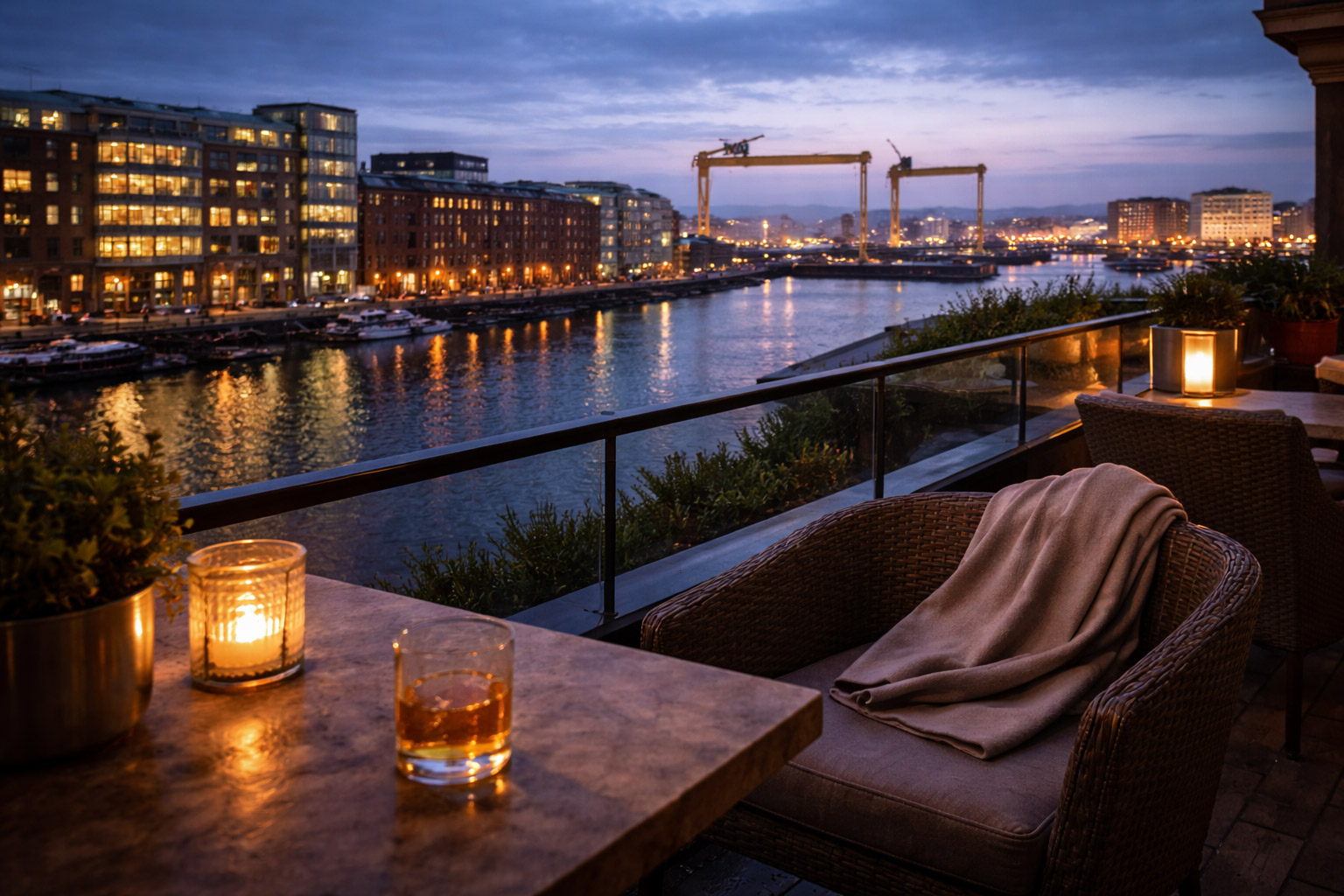
Titanic Quarter sits along Belfast’s regenerated waterfront, shaped by modern office buildings, research facilities, and mixed-use developments rather than traditional residential streets. The area feels structured, with movement largely driven by working hours rather than spontaneous nightlife.
Within this environment, many professional women working in corporate services, public administration, maritime-related industries, and media production follow clearly defined weekday routines. The area’s proximity to business districts and transport links makes it a practical base rather than a social destination.
Interactions here tend to emerge in low-intensity settings — shared cafés near office entrances, riverside walking paths during lunch breaks, or brief exchanges in transitional spaces like building lobbies and transport stops. Over time, familiarity forms through repetition rather than planned social events.
From an observational standpoint, Titanic Quarter reflects a Belfast pattern seen in several redeveloped districts: professional proximity creates recurring encounters, but social boundaries remain relatively contained due to structured work schedules and mixed-use zoning.
Botanic Avenue serves as an initial social hub for Belfast’s younger and early-career population. University students, graduate interns, and emerging professionals often gather here, creating a lively yet approachable environment. Cafés, casual bars, and small cultural venues contribute to a sense of openness, making first-time interactions easier and less formal.
Although connections begin here, they frequently mature elsewhere. Neighborhoods such as Lisburn Road or the quieter streets near the city centre tend to host more stable, longer-term social circles. Observations suggest that the transition from Botanic Avenue to these areas often reflects an increase in trust, shared interests, and professional alignment among local residents.
Belfast’s city centre acts as a crossroads rather than a destination. Streets, cafés, and transit hubs are constantly in motion. People move between offices, apartments, and social venues, yet few locations hold attention for long.
Social interaction here is inherently transitional. Conversations over coffee or lunch, but meaningful connections often require moving into quieter neighborhoods or more private settings to develop.
Dating in Belfast reflects the city’s compact scale and dense professional networks. Privacy and discretion are considered standard. Local norms favor gradual trust-building over public displays of attachment.
In Belfast, professionals and individuals valuing discretion often treat the dating process as a series of careful steps. Trust, reliability, and consistency carry more weight than speed or spectacle.
Local expertise suggests that understanding the city’s rhythm—peak hours, quiet streets, and cultural hotspots—supports both personal safety and meaningful connections.
In Belfast, social networks often overlap with professional and community connections. How someone is perceived tends to travel quickly through colleagues, neighbors, and friends, creating a subtle but influential social feedback loop.
This “soft accountability” shapes interactions. Actions in one setting often ripple into wider circles, making discretion and reliability highly valued. People generally take time to observe social cues before forming deeper connections.
Within these networks, shared experiences, local knowledge, and consistent behaviour are often more important than outward appearances or temporary gestures.
Compared with major UK cities, Belfast offers a relatively lower cost of living, which subtly influences dating and social behaviour. Dining out, entertainment, and shared activities are accessible without creating financial pressure.
This affordability encourages frequent, casual meet-ups where the emphasis is on genuine interaction rather than conspicuous spending. Local dating patterns often favour steady engagement over high-cost gestures.
As a result, social life in Belfast tends to be a balance between regular activity and sustainability. People prioritise consistency, mutual respect, and shared interests, reflecting both the city’s pace and its community-minded culture.
In Belfast, professional women—particularly those working in healthcare, law, and public administration—tend to prioritize structured routines and predictable social patterns. Careers in these sectors emphasize responsibility, reliability, and measured decision-making, which naturally extends to social interactions and dating.
Relationships often develop gradually. Regular encounters through work, social clubs, or local community events provide repeated exposure, allowing trust and familiarity to grow over time rather than relying on immediate chemistry or spontaneous connections.
The dating landscape in Belfast differs from that in London or other major UK cities due to scale and community density. Smaller city dynamics mean individuals are more likely to meet the same people multiple times across social, professional, or community settings.
This repetition fosters familiarity and a clearer understanding of social boundaries. For many professional women, consistency, reliability, and demonstrated respect for personal and professional commitments often carry more weight than first impressions or flashy gestures.
Observations about social interaction patterns in Belfast are generally shaped by a compact city structure, repeated social exposure, and a strong overlap between daytime routines and evening venues.
Most introductions tend to happen through repeated presence in familiar environments rather than one-off encounters. Cathedral Quarter venues, Lisburn Road cafés, workplace-adjacent routines, and university-linked spaces such as Botanic Avenue often create gradual familiarity before any direct interaction takes place.
Different districts serve different social rhythms. Cathedral Quarter is more activity-driven and nightlife-oriented. Lisburn Road reflects structured professional and residential routines. Titanic Quarter has a more daytime, workplace-linked flow. Botanic Avenue and surrounding areas often connect to student and early-career networks.
Nightlife plays a role, but it is usually an extension of existing familiarity rather than the starting point of new connections. People often already share overlapping social or professional links before meeting in evening settings.
Discretion is commonly observed due to the size of the social environment. Many individuals operate within overlapping circles, meaning personal information and relationship dynamics are typically handled with a degree of privacy to avoid unnecessary visibility.
In many cases, yes. Smaller urban scale and repeated social overlap contribute to a slower, more observational pace in relationship development. Trust tends to build through consistency and shared environments rather than rapid public exposure.
Cost of living can indirectly shape social patterns. More accessible pricing in hospitality and entertainment spaces allows for frequent social interaction without high financial pressure, which often results in more casual, routine-based meetups rather than high-stakes planning.
Meet verified people near you