
Join over 5M+ verified members worldwide and start connecting today in a privacy-first, respectful dating environment.
Join over 5M+ verified members worldwide and start connecting today in a privacy-first, respectful dating environment.
It usually begins with sound rather than intention. A low bassline slipping through the cracked entrance of a basement venue in the West End, mixing with cold air outside. On Sauchiehall Street, groups form and dissolve without announcement. People pause near doorways more than they enter them immediately. In Glasgow, arrival is often delayed by observation.
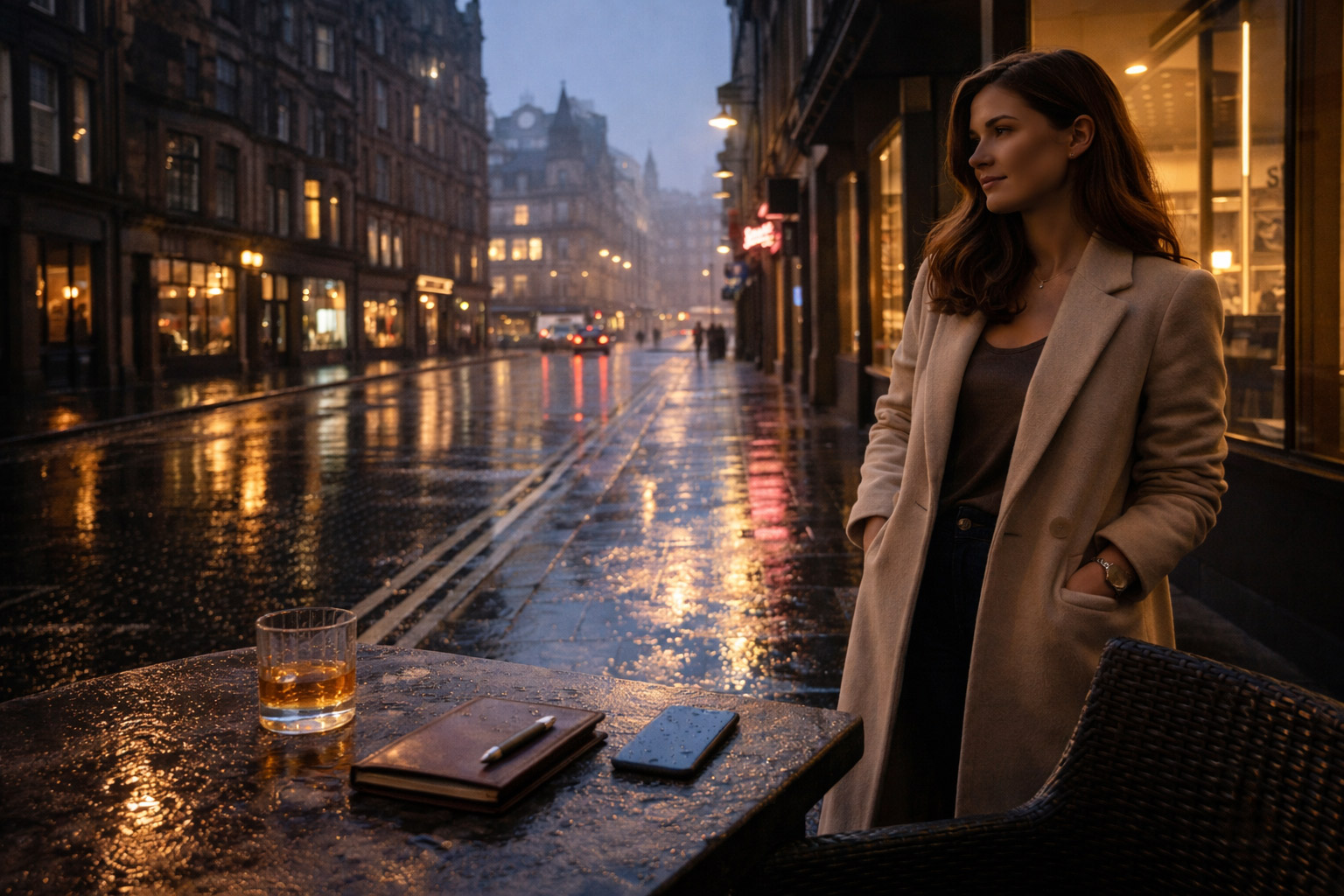
In Merchant City, conversation tends to spill outward rather than stay contained. A table at a late opening café becomes part of the street for a moment—someone leaning back, someone else finishing a sentence that never fully resolves. There is no clear boundary between being inside or outside a social moment. It is shaped by repetition of presence rather than introduction.
The term “Sugar Mummy Glasgow” appears in search behavior more than in lived social language. Locally, relationships between older established women and younger men are rarely framed in categorical terms. They are more often embedded in normal social overlap—work events around the City Centre, postgraduate circles near the University of Glasgow, or casual encounters in places where people already return regularly.
Glasgow dating culture does not rely heavily on formal signaling. It is less about presenting identity and more about being seen consistently in the same environments over time. Repeated presence carries more weight than introduction. A familiar face at Finnieston restaurants, Kelvingrove Park walks, or late-night venues in the West End often matters more than any structured approach to meeting people.
From an observational standpoint, how people meet in Glasgow, Scotland is shaped by geography compressed into walkable distance. West End, City Centre, Finnieston, and Merchant City are close enough that social circles overlap unintentionally. Encounters often happen twice before they are acknowledged, and recognition builds gradually rather than immediately.
Glasgow's social dynamics vary sharply by neighbourhood. The city centre hums with brisk, mixed interactions, while the West End favours slower, more deliberate connections. Finnieston’s scene revolves around bars, restaurants, and a younger professional crowd, contrasting with the Merchant City, where nightlife density and late hours create a distinct rhythm of socialising. Understanding these nuances helps anyone navigating the city’s professional and social networks.
Music selection, venue layout, and ambient noise are more than aesthetic details — they actively shape interaction patterns. Observing how locals engage in different districts provides insight into Glasgow’s nuanced social architecture and can guide safe, meaningful introductions.
The West End unfolds at its own pace. Around Hillhead and Byres Road, the flow of people is steady, almost predictable, shaped by university schedules and research timetables rather than rush-hour spikes. Local cafés and bookshops see consistent foot traffic from staff and students alike, forming natural meeting points.
Glasgow’s academic and creative communities intersect here. University lecturers, researchers, and professionals in cultural sectors often start conversations in the late afternoon, letting exchanges evolve naturally into evening gatherings. Observing these patterns, it’s clear that familiarity and shared environments matter more than scripted social attempts.
Professional women in the West End—particularly in education, research, and creative industries—exhibit a quiet, deliberate presence. Engagements are measured, attentive, and consistent. Regular encounters in the same cafés or local events often build subtle trust over time, reflecting a local rhythm that outsiders rarely anticipate.
Safety and social etiquette are respected instinctively: meetings begin in well-frequented spaces, schedules align with predictable university patterns, and introductions often rely on professional or academic connections. The environment encourages observation, patience, and thoughtful dialogue, rather than hurried interactions.
In Finnieston, Glasgow, everything feels compressed. Restaurants, cocktail bars, and small venues are all within a short walk. Locals and regular visitors move through the same paths repeatedly, creating a dense, recognizable social fabric.
Women working in creative industries — media, design, and digital sectors — are particularly visible here. Their routines and professional networks shape how social interactions unfold: who they meet, where they go, and the cadence of their evenings.
Conversations often begin in a measured energy — neither forced nor overbearing. This rhythm allows introductions to occur naturally, and repeated encounters build subtle trust over time.
For newcomers, understanding Finnieston’s rhythm is key. Meeting someone in public settings first, observing local norms, and respecting personal space are standard practices. Recognizable patterns of social movement can guide safe and comfortable interactions.
Merchant City’s social scene in Glasgow accelerates later in the evening. After 9pm, pedestrian movement increases, groups form and disperse quickly, and social energy intensifies in bars and venues.
Here, visibility is high, but interactions are often brief. Initial exchanges may feel superficial, yet repeated recognition across nights builds credibility and familiarity over time. Women active in professional and creative circles are noticeable not because of ostentation but because of consistent participation in local events.
Visitors should approach this area with awareness of the fast-moving environment. Meeting in well-lit, public venues, staying aware of exits and transportation options, and respecting personal boundaries are practical measures that align with both safety and social etiquette in Glasgow’s high-traffic districts.
Central Glasgow serves as a corridor rather than a destination. Professionals, including healthcare staff, often pass through quickly, with meetings starting here but rarely ending here.
Schedules are tightly packed, particularly for NHS employees whose shifts vary. Brief windows of availability shape interactions, creating a sense of constant movement.
Time is a visible concern. Conversations are concise, often interrupted by the rhythm of commuting or work obligations. The flow of the city dictates pace and focus.
Shawlands provides a counterpoint. Streets feel calmer, interactions linger. Local cafés and smaller venues encourage extended presence and more meaningful exchanges.
Urban lifestyle elements — independent shops, quieter streets, cultural spots — make personal connections more observable and tangible. Interactions in this area tend to deepen gradually, reflecting stability beyond the initial encounters in the city centre.
For residents and visitors in Glasgow, Scotland, GB, these differences illustrate how location influences social dynamics, from fleeting city centre meetings to more sustained connections in neighbourhood hubs like Shawlands.
In Glasgow, live music isn't just entertainment — it shapes social interaction. Venues from King Tut’s to small basement gigs create spaces where shared experience comes first, conversation comes second. These moments allow people to connect over what they hear rather than what they say.
Local Glaswegians often describe it as a natural filter. Musical taste signals lifestyle, openness, and cultural alignment before introductions even start. It’s a subtle way to gauge compatibility without traditional pressures.
Dating culture in Glasgow tends to value authenticity above titles or appearances. Overly curated behaviour often signals distance rather than confidence. People respond more to genuine humour, timing, and the nuances of conversation than to outward displays of wealth or position.
Profession, income, or social rank usually emerge later in the connection, if at all. This creates an environment where trust, shared interests, and personal integrity carry more weight than superficial markers.
Observers note that Glaswegians prize consistency and reliability. A person’s day-to-day behaviour — how they show up, communicate, and engage — often speaks louder than any résumé or status symbol.
Glasgow presents a distinct rhythm for professional and affluent social interactions compared with cities like London. A combination of manageable living expenses and abundant cultural venues allows local professionals to meet and socialize more frequently without significant financial pressure.
Regular gatherings—coffee meetings, gallery openings, riverside walks, or boutique dining—help relationships develop naturally over time. This consistent, low-pressure interaction builds trust and familiarity, creating a social pace that reflects both practicality and lifestyle preferences.
Local social norms in Glasgow emphasize discretion and gradual disclosure. Professionals and educated residents tend to adopt patterns that balance openness with personal security:
While these practices may not be explicitly stated, they reflect an understanding of local social etiquette and risk awareness among Glasgow’s professional communities.
Local interactions often happen in familiar environments. Cafés, music venues, and cultural events in West End, Finnieston, or Merchant City are frequent meeting points. Repeat presence in the same social spots over weeks builds recognition and trust.
Music and nightlife act as social catalysts, especially in areas like Sauchiehall Street and Ashton Lane. Live performances and bar gatherings often create informal opportunities for conversations that might lead to connections.
Many locals are approachable and conversationally open, but social norms still guide interactions. Observing body language, respecting personal space, and timing conversations around casual encounters matter more than assertive approaches.
Neighborhoods such as Shawlands, Pollokshields, and some pockets of the West End provide calm cafés, bookshops, and boutique galleries where initial social engagement feels low-pressure yet meaningful.
In Glasgow, personality, shared experiences, and mutual interests often outweigh visible status. Community involvement, cultural participation, and reliability tend to carry higher social currency than titles or income alone.
Absolutely. Glaswegians generally value discretion. Initial meetings in public spaces, maintaining clear communication, and protecting personal information are considered standard precautions, especially when engaging with people outside established social circles.
Meet verified people near you